
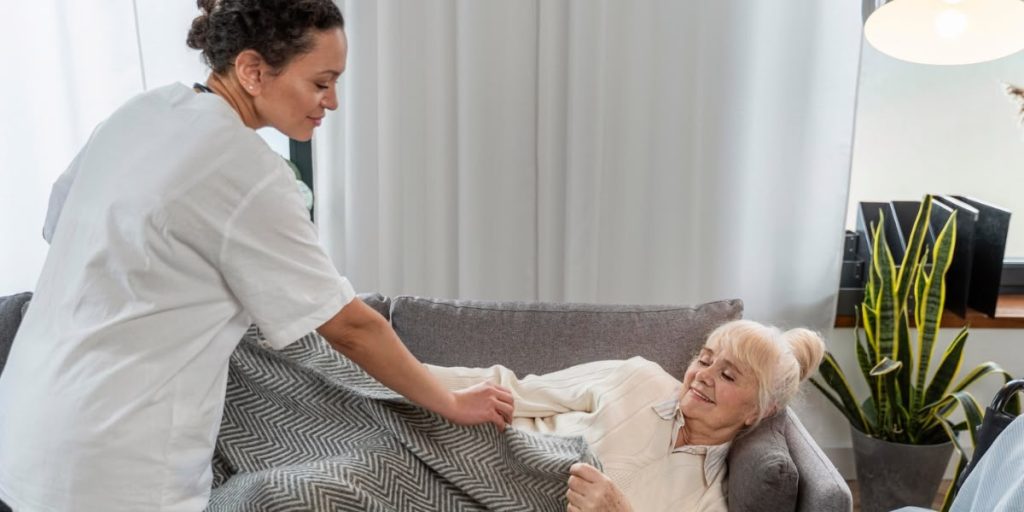
If you’re figuring out how to help a senior stay safe at home, start with the environment before you try to change the person. Improve lighting, remove trip hazards, secure the bathroom, simplify medications, and make sure help is reachable within seconds. Most serious injuries at home aren’t caused by one dramatic event — they’re caused by small, fixable details that everyone walked past for years.
Here’s what usually happens: nothing is wrong, exactly. Dad just seems slower on the stairs. Mom mentions she “slipped a little” in the bathroom and changes the subject. Nobody’s in crisis, so nobody acts. Then one fall rearranges the entire family’s year.
Idaho Falls families rarely get a warning shot. So the goal isn’t to wait for a reason — it’s to quietly remove the reasons before they find one.
Why “Be Careful” Doesn’t Work
Telling an aging parent to be careful puts the whole burden on their reflexes, which are the one thing that isn’t getting better. It also tends to backfire — most seniors hear it as “you’re becoming a problem,” so they stop reporting the near-misses. You end up with less information, not more.
The better approach is boring and physical. Change the house, not the habits. A hallway that’s lit at 2 a.m. protects them whether they’re careful that night or not.
Room by Room: The Fixes That Actually Matter
Bathrooms. This is where the highest share of home injuries happen, and it’s the room families delay the longest because it feels invasive. Grab bars beside the toilet and inside the shower, a non-slip mat, and a shower chair cover most of the risk. A raised toilet seat helps more than people expect.
Stairs and hallways. Both-side handrails, no runners or loose rugs, and a light switch at the top and bottom. If your parent uses the stairs at night, add motion-activated lighting — it removes the decision entirely.
Bedroom. A lamp they can reach without sitting up, a clear path to the bathroom, and a phone within arm’s reach of the bed. Long winter nights in Idaho Falls mean more hours navigating a dark house.
Kitchen. Move the everyday items to waist height. Nobody should be climbing a chair for a mixing bowl. If the stove is a worry, an auto-shutoff device is far easier than an argument.
Entryways. Ice is the quiet danger here. Keep a de-icer bucket by the door, check the porch light monthly, and make sure a neighbor or service is committed to clearing the walk — not “usually gets to it.”
That list covers the physical side of how to help a senior stay safe at home, but the environment is only half the picture.
The Risks That Aren’t Structural
Medications. Missed doses and doubled doses cause dizziness, confusion, and falls. A weekly organizer plus one written list of everything they take — including supplements — solves most of it.
Dehydration and skipped meals. Both quietly reduce balance and alertness. Someone who eats a real lunch is measurably steadier that afternoon.
Isolation. A senior who goes days without conversation tends to notice their own decline less and report it later.
Response time. Ask yourself honestly: if they fell at 7 p.m. on a Tuesday, how long before someone knew? If the answer is “hours,” that’s the biggest gap in the plan — bigger than any grab bar.
When Home Modifications Aren’t Enough
There’s a point where the house is as safe as a house can be, and the remaining risk is simply that no one is there. Families usually recognize it in the same way: the check-in calls get more frequent, and the answers get vaguer.
That’s the stage where knowing how to help a senior stay safe at home stops being about equipment and starts being about presence. It doesn’t have to be full-time. A few structured visits a week — someone who handles the shower, confirms the medications, makes a real meal, and actually notices when something’s off — closes the gap that no handrail can.
The families who avoid the emergency-room version of this story are almost never the ones with the most gadgets. They’re the ones who added a set of eyes early.
Frequently Asked Questions
What’s the single biggest safety risk for a senior living alone? Falls, by a wide margin — and the bathroom is the most common location. Securing that one room delivers the largest return of any change you can make.
My parents refuse to grab bars because they look “medical.” Any advice? Frame it as a house upgrade rather than a health accommodation. Many modern grab bars double as towel bars and look like standard fixtures, which removes most of the objection.
How do I know when they need more than home modifications? Watch for repeated near-misses, unexplained bruises, missed medications, weight loss, or a home that’s noticeably less kept than it used to be. Any two of those together usually means the house isn’t the problem anymore.
Can care start small instead of all at once? Yes, and it usually should. Starting with a few hours a week lets your parents build trust with a caregiver before they ever need one urgently.
Does Evermore Home Care serve Idaho Falls directly? Yes. Evermore™ Home Care helps families throughout Idaho Falls, ID and the surrounding areas figure out how to help a senior stay safe at home — with in-home support that scales as needs change.
Let’s Take a Look Together
If you’re not sure whether your parent’s home is genuinely safe or just familiar, Evermore™ Home Care is glad to walk through the specifics with you — no pressure, no sales pitch, just a straight conversation about what’s worth changing first.
📞 (208) 346-1812 📍 555 1st St, Idaho Falls, ID 83401
Evermore™ Home Care | Licensed by the Idaho Department of Social Services — Home Care Services Bureau | Independently owned and operated.